
The golden spiral, golden rectangle, and natural patterns can be practically implemented to tease out the design of your personal temple. The golden spiral can be used to create a visually pleasing layout, the golden rectangle can guide the proportions of the temple’s façade and interior spaces, and natural patterns can be mimicked to inspire the overall aesthetic.
Let’s not forget that as humans, we are an integral part of nature, we are not separate from it. By observing pleasing natural proportions from creation around us and incorporating them into our personal temple designs, we can achieve beautiful spaces that resonate with the natural world.
Incorporating sacred geometry into temple design offers a profound way to connect architectural spaces with the universal patterns of nature. Sacred geometry, with its shapes, proportions, and patterns found in nature, serves as a bridge between the spiritual and the physical world. This primordial influence enriches the design with a deep spiritual significance.
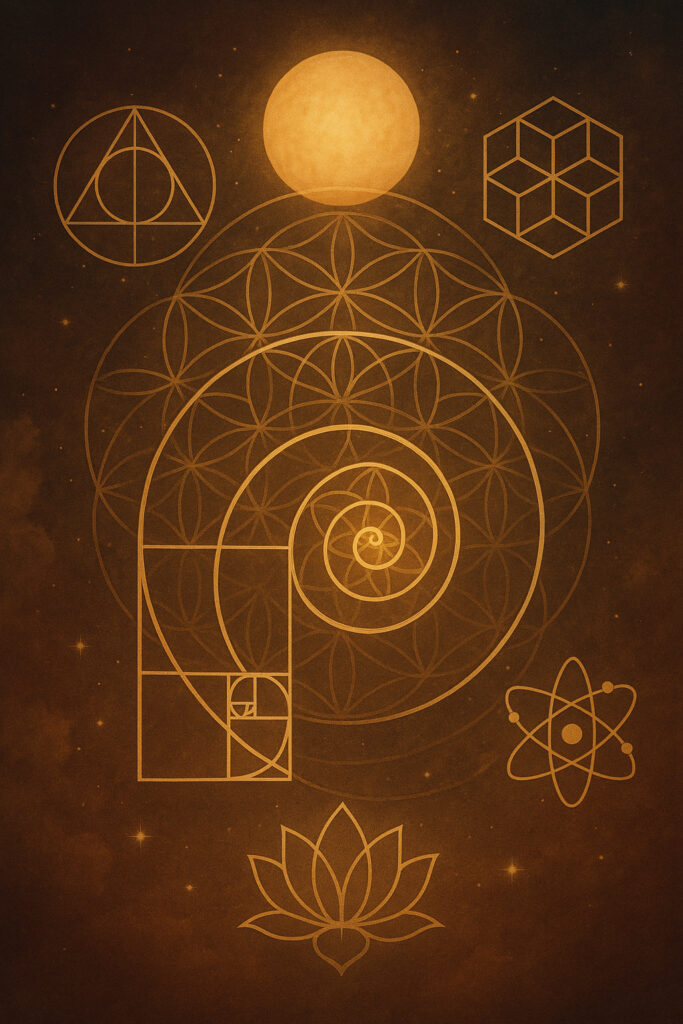
Your journey begins by studying these patterns and sources of inspiration in nature — marveling at the spirals within seashells, the form of flowers, and the symmetry of honeycombs. This research forms the basis upon which your temple design can grow. Once you have a solid understanding of these geometric patterns, consider how they can influence the layout of the temple. You are the co-creator of your sacred space.
The first step in integrating sacred geometry into temple design is to understand the core shapes and patterns inherent in the concept. The golden ratio, the Fibonacci sequence, and various geometric forms like the lotus flower, spirals, and circles convey harmony and balance. These shapes have been revered across cultures for their spiritual significance and aesthetic appeal.
The manifested physical shapes that come into existence on our planet follow the pattern set by the five elements: earth, air, fire, water and ether. Molecules of physical matter emanate from the energetic essence of these energies as physical matter in the form of solids, liquids, and gases.
Examining the physical manifestation of matter on both macro and micro levels demonstrates that everything, from the largest structures all the way down to atoms, conforms to the patterns within the elements.
In the background of the fabric of reality, which underlies and intersects all physical matter, is a grid. Energy along points of this grid can crystallize, bringing forth physical objects that relate to the influence of the underlying layout of Universal energy.
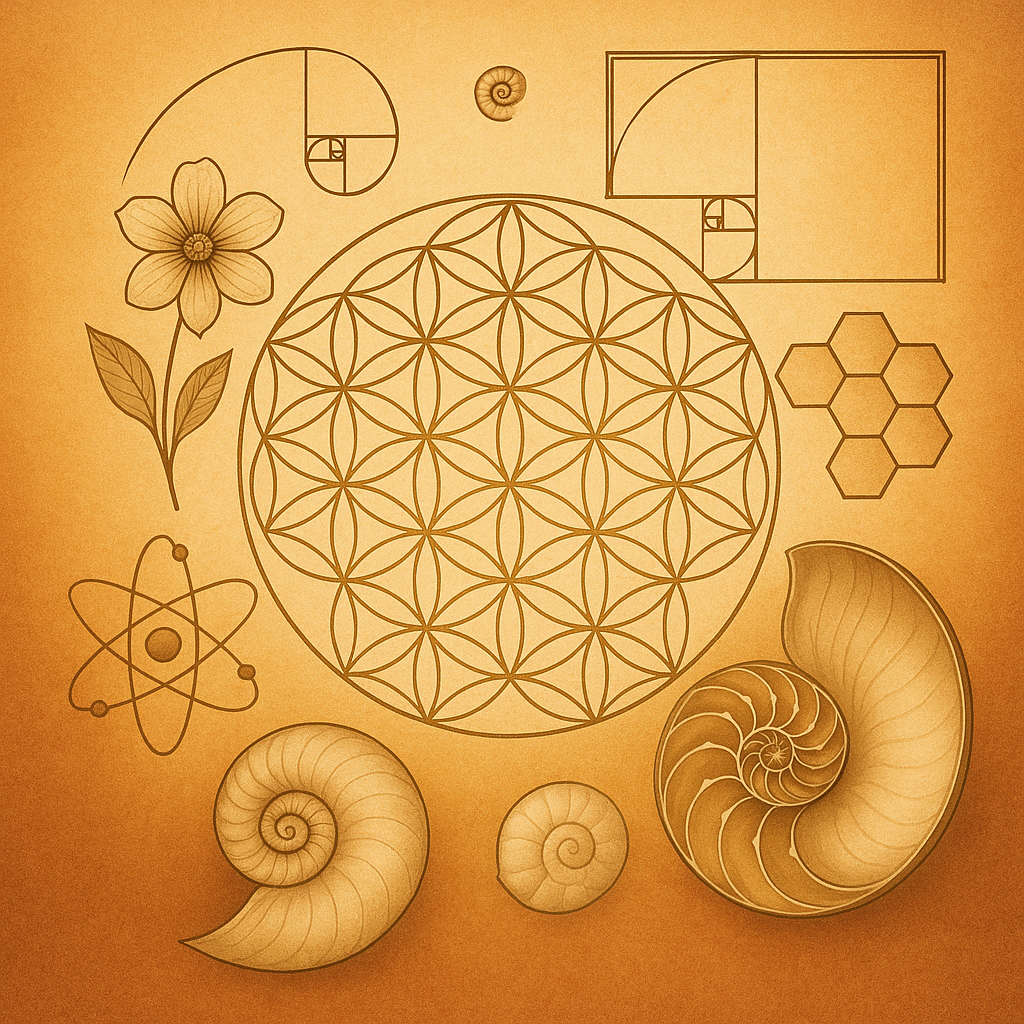
The Golden Ratio, a design principle that shows up in the cells of a honeycomb, the graceful curves of a nautilus shell, and the depiction of the Flower of Life by such widely ranging civilizations as the ancient Chinese, the Mesopotamians, and the people of ancient Israel, Sweden and Turkey, is a testament to the universal appeal of sacred geometry. It’s a language that transcends cultures and time, connecting us to a larger spiritual community.
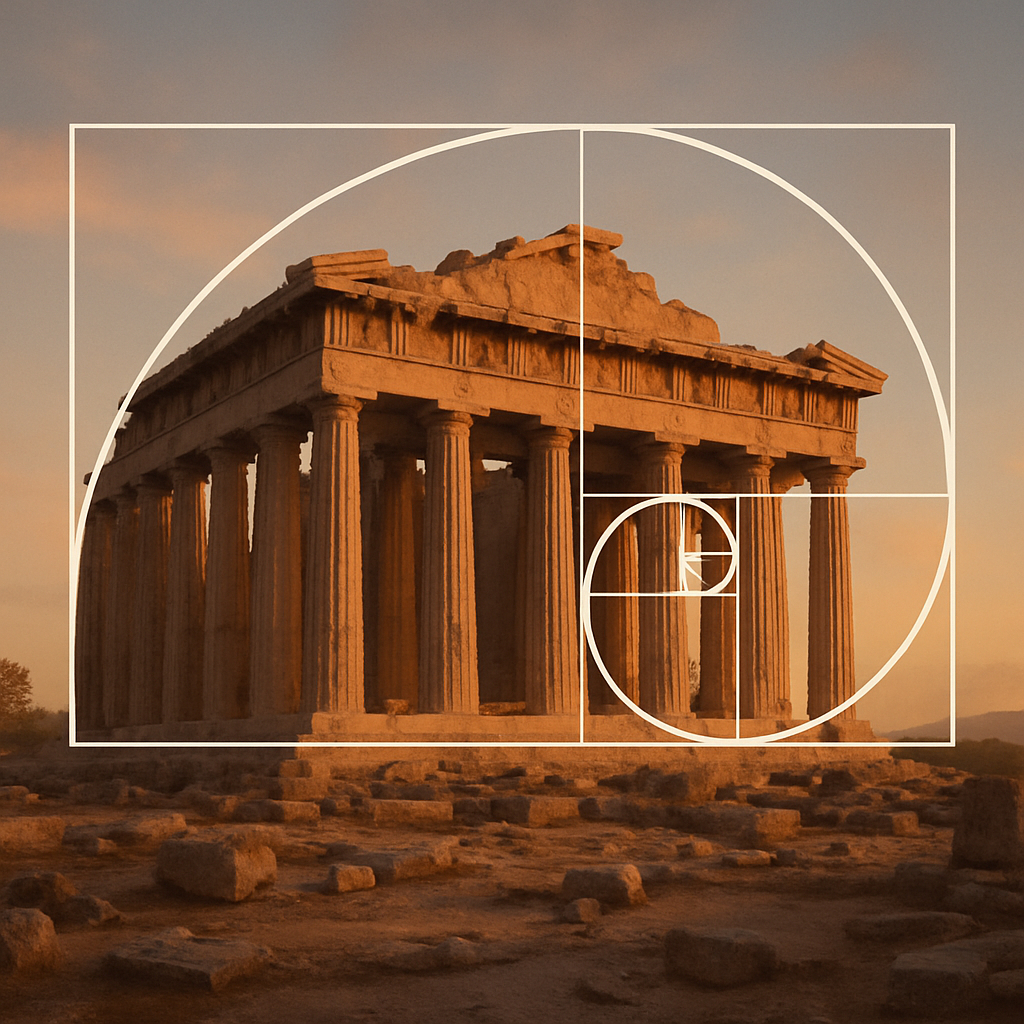
The golden rectangle, which is derived from the golden ratio, can serve as an essential guideline for the proportions of the temple’s façade and interior spaces. This shape can create a sense of harmony and balance. Applying these principles will enable us to create an inviting and sacred space.
The Fibonacci sequence:
Each number in the sequence is the sum of the two preceding ones. The Fibonacci spiral seems to be the design language of the Universe. The spiral form represents the most efficient solution to outward growth and space constraints. The form is naturally appealing, inspiring designers who witness the pattern everywhere they look. Our sense of harmony and beautiful proportions is piqued as our conscious and unconscious minds take in the resonant patterns in the natural world all around us. The pleasing proportions created by architects in their designs are both aesthetically appealing and structurally sound. Because creations based on this ratio are similar to what Mother Nature develops to survive in the wilderness.
While musing upon a temple’s design, the flux and play of sacred geometry are of paramount importance. There really is no wrong juxtaposition of forms and flow, as long as it resonates with the land around the sacred space. The layout can incorporate natural patterns such as circles or spirals to define pathways, openings, and zones of meditation. A spiral pattern, for instance, can guide visitors through a transformative journey as they move towards the center, as labyrinths of old once forged a deeper connection with the divine.
Natural light plays a crucial role in the temple’s design, enhancing the beauty and serenity of the space. By integrating geometric patterns into the placement and shape of windows, you can create stunning light displays that change throughout the day, reflecting the interplay between geometry and the natural world.
Incorporating materials that reflect natural elements is another way to resonate with sacred geometry. Use stone, wood, and clay to celebrate the forms and energies of earth, water, air, and fire, empowering the temple with a physical manifestation of these elements.

Landscaping is vital to incorporate sacred geometry into the temple’s overall design. Gardens can mirror geometric patterns, with pathways that curve or spiral outward from the temple, creating natural flow and movement. Plants can be arranged using Fibonacci sequences or other geometric patterns to enhance the connection to nature and illustrate the beauty of these principles in action.
Lastly, utilizing artwork and symbolism in your temple can further the connection to sacred geometry. Murals, sculptures, and other artworks can depict these forms, creating a dialogue between the seen and unseen, the earthly and the divine. Embedding sacred geometry into various aspects of temple design creates a harmonious space where visitors can meditate, reflect, and deepen their spiritual practices.
At the foundation of sacred geometry are patterns that are at once hidden and right out there in plain view. These subtle energetic patterns profoundly influence a person’s ability to evolve their consciousness toward an awareness of oneness and enlightenment. Inherent within the concept of oneness is the idea that one person working toward raising their own consciousness will benefit all of humanity (and all of creation) and assists in the exaltation of all consciousness.